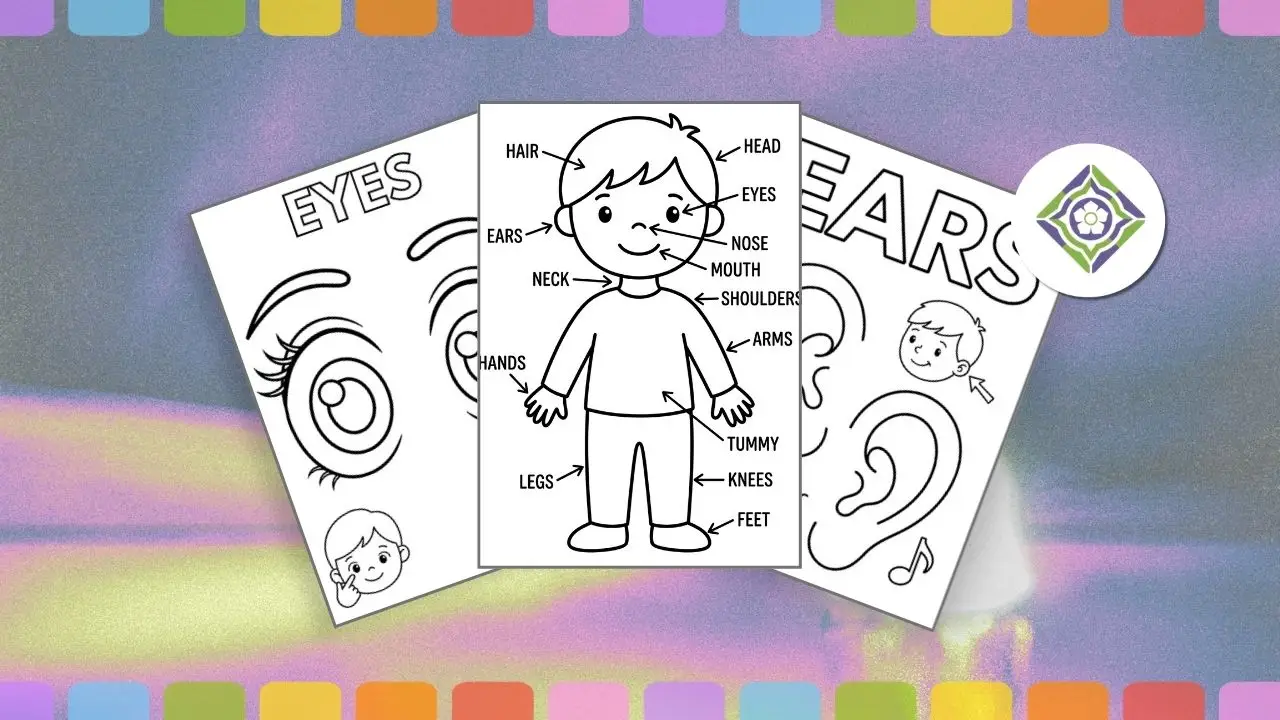
The moment children discover their own bodies is one of the more interesting things to watch. My nephew went through a phase at around age two where he would point to different parts of his face and announce their names with the satisfied authority of someone who has just learned something important. Nose. Eye. Ear. He was right about all of them. Body parts coloring pages build on exactly that kind of early discovery. They give children a structured creative activity that connects the names they are learning to a visual they can colour, label and remember.
This collection has 30+ free designs covering external body parts for toddlers, sense organs, hygiene scenes, internal organs for older children and labeling pages for classroom use. All pages download as free PDFs and print on US Letter and A4 paper without sign-up.
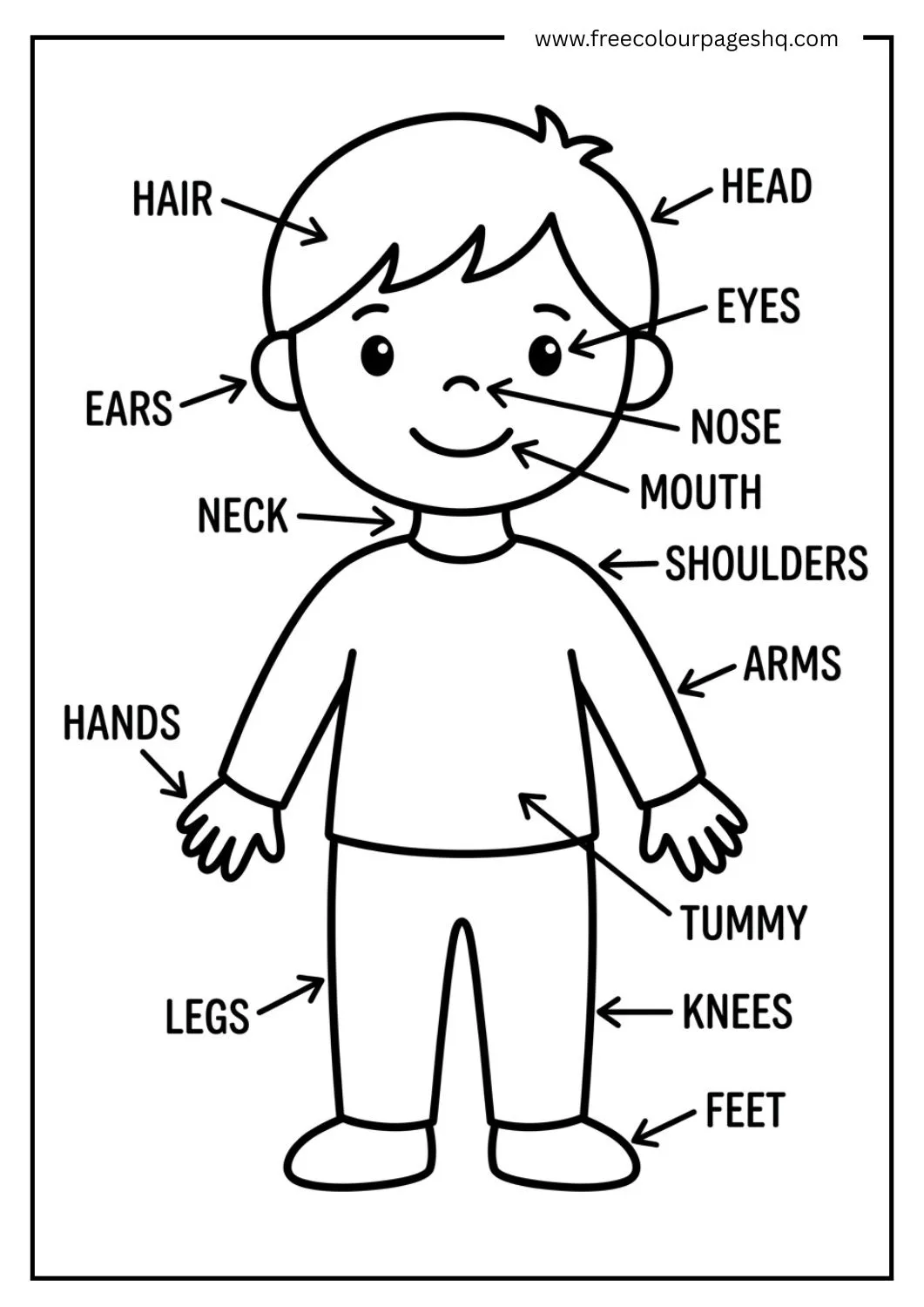
body parts coloring page for kids full body
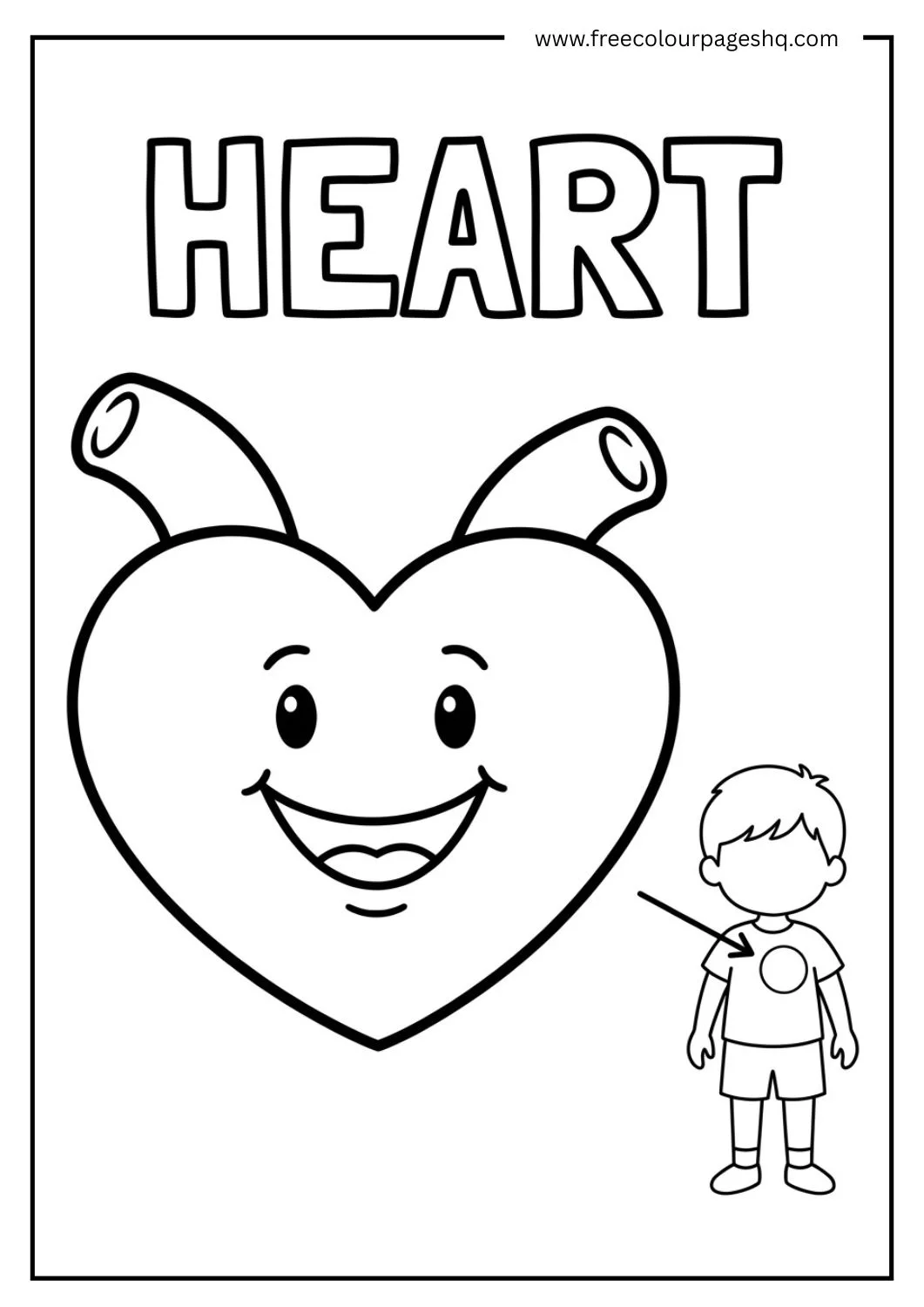
heart body parts coloring page for kids simple
Head coloring page for kids’ body parts
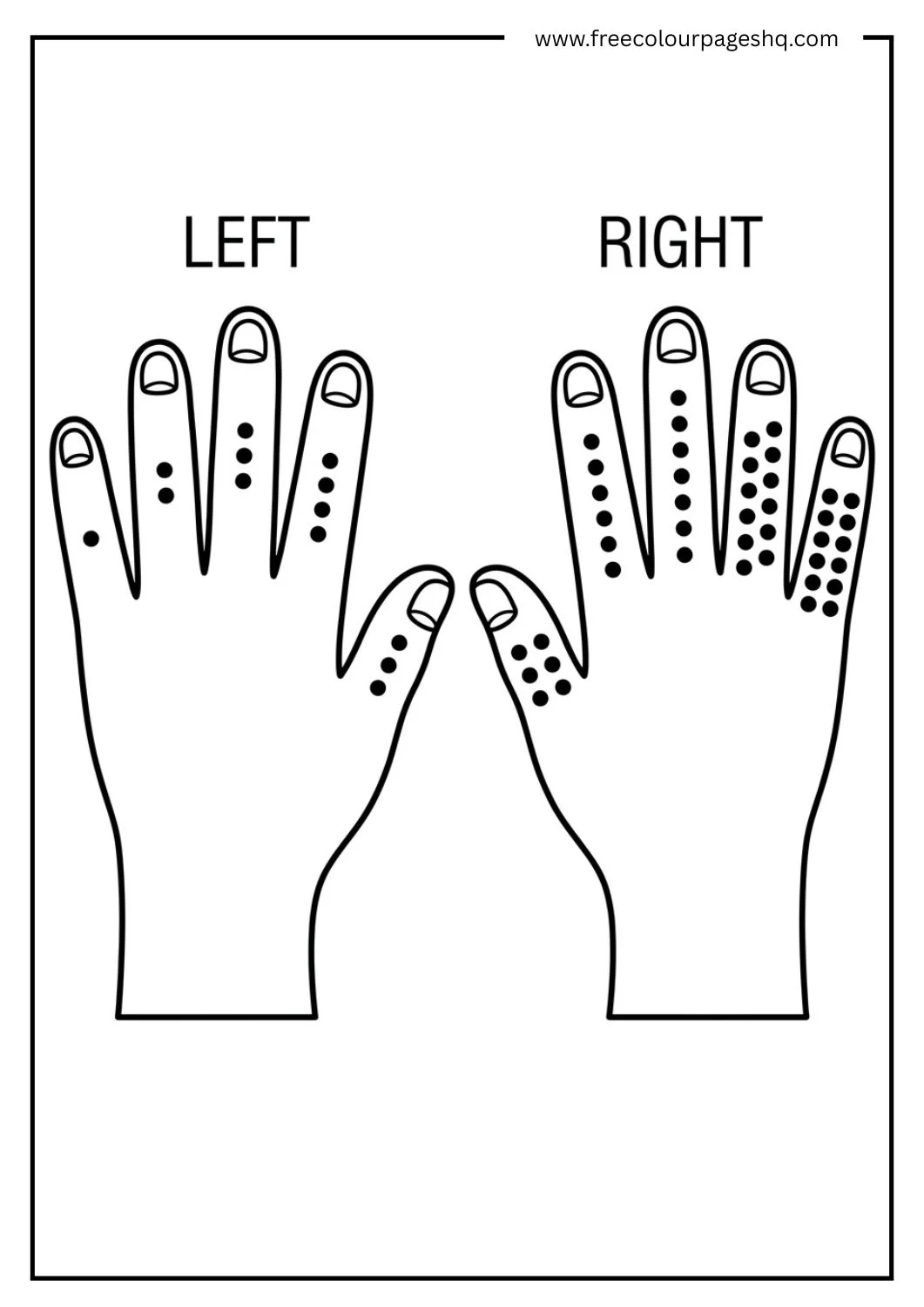
hands coloring page for toddlers body parts
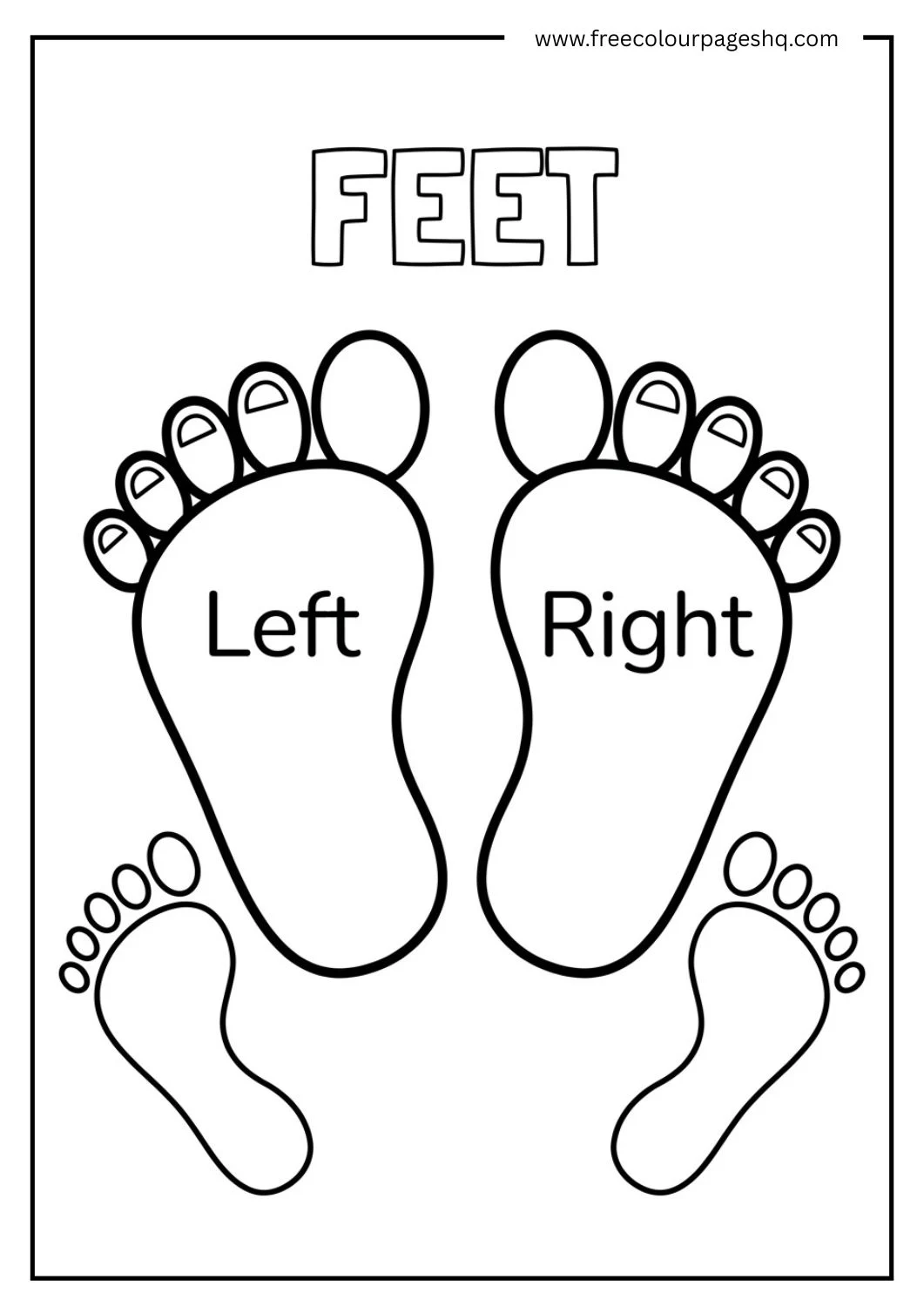
feet coloring page body parts for preschool
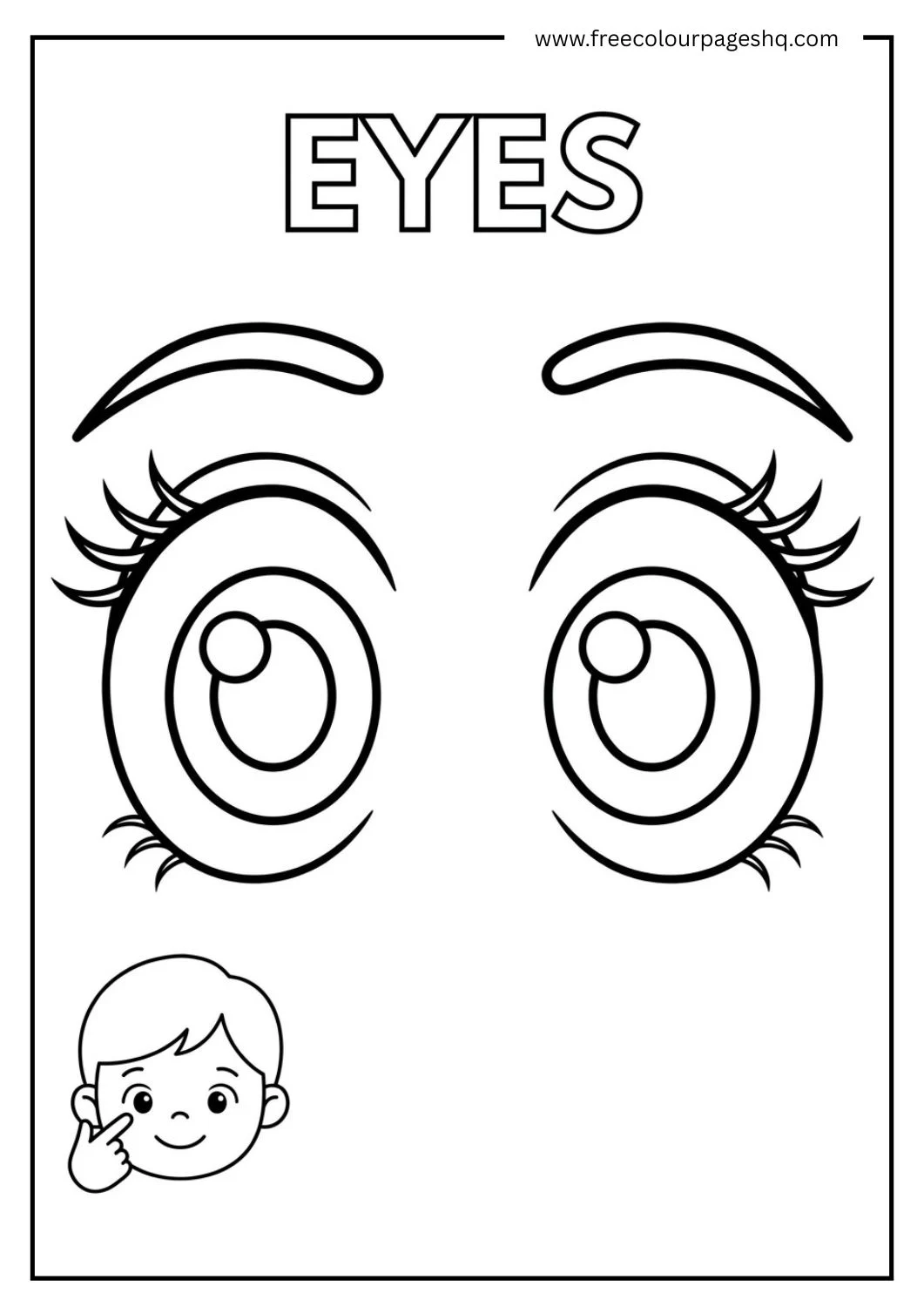
eyes coloring page body parts for preschool
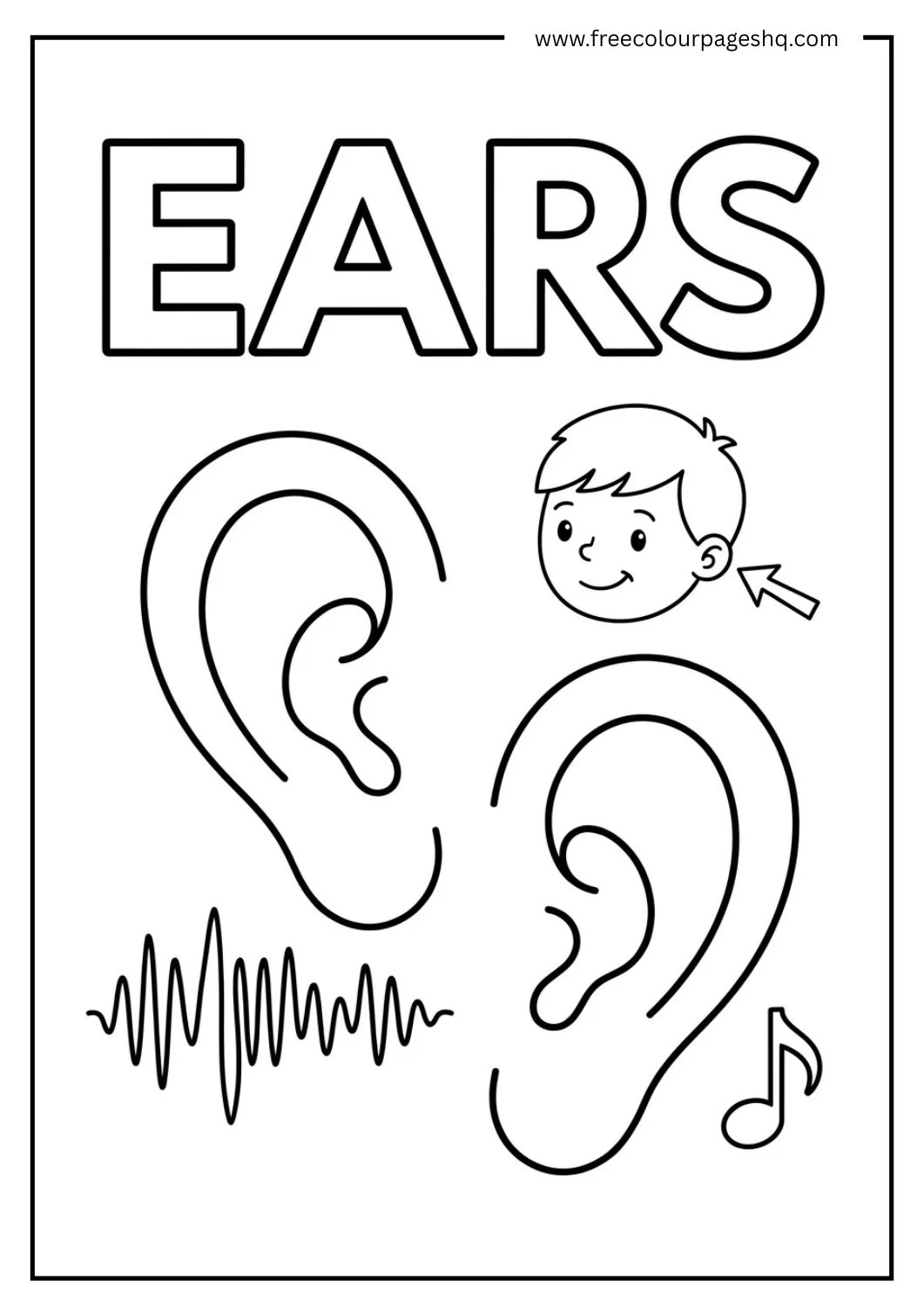
ears coloring page body parts kids
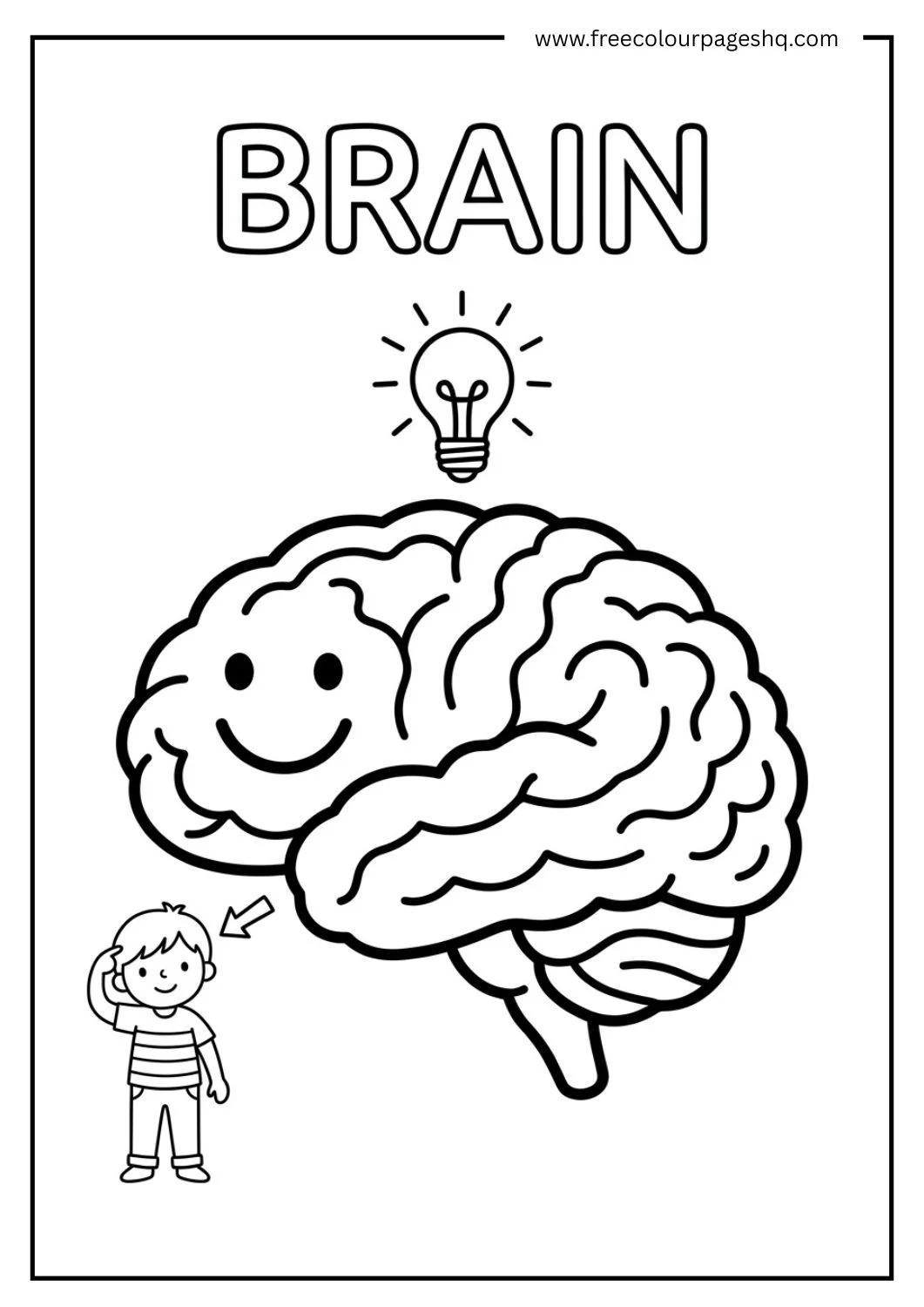
Brain body parts coloring page for kids
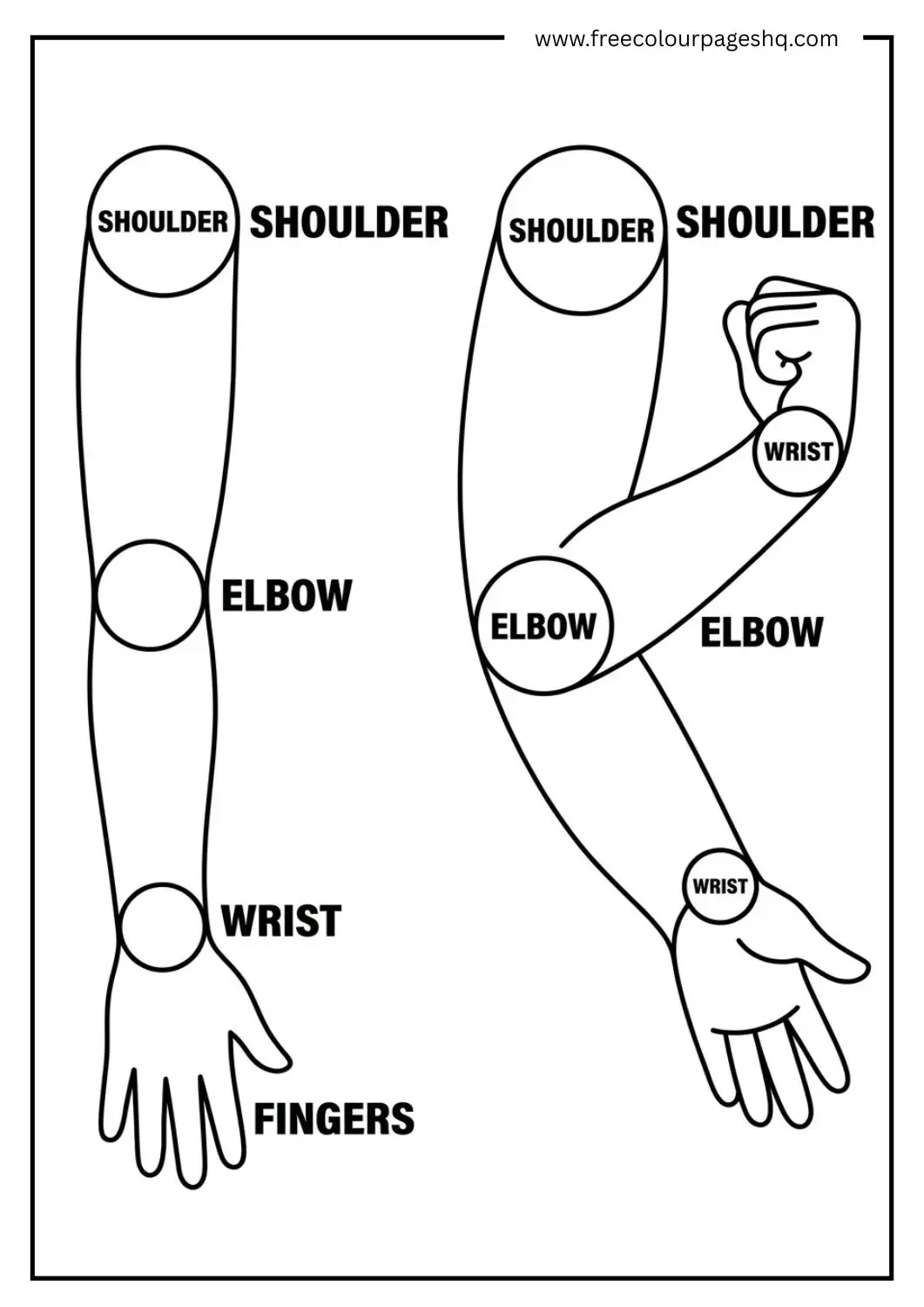
body parts coloring page shoulder arm elbow wrist
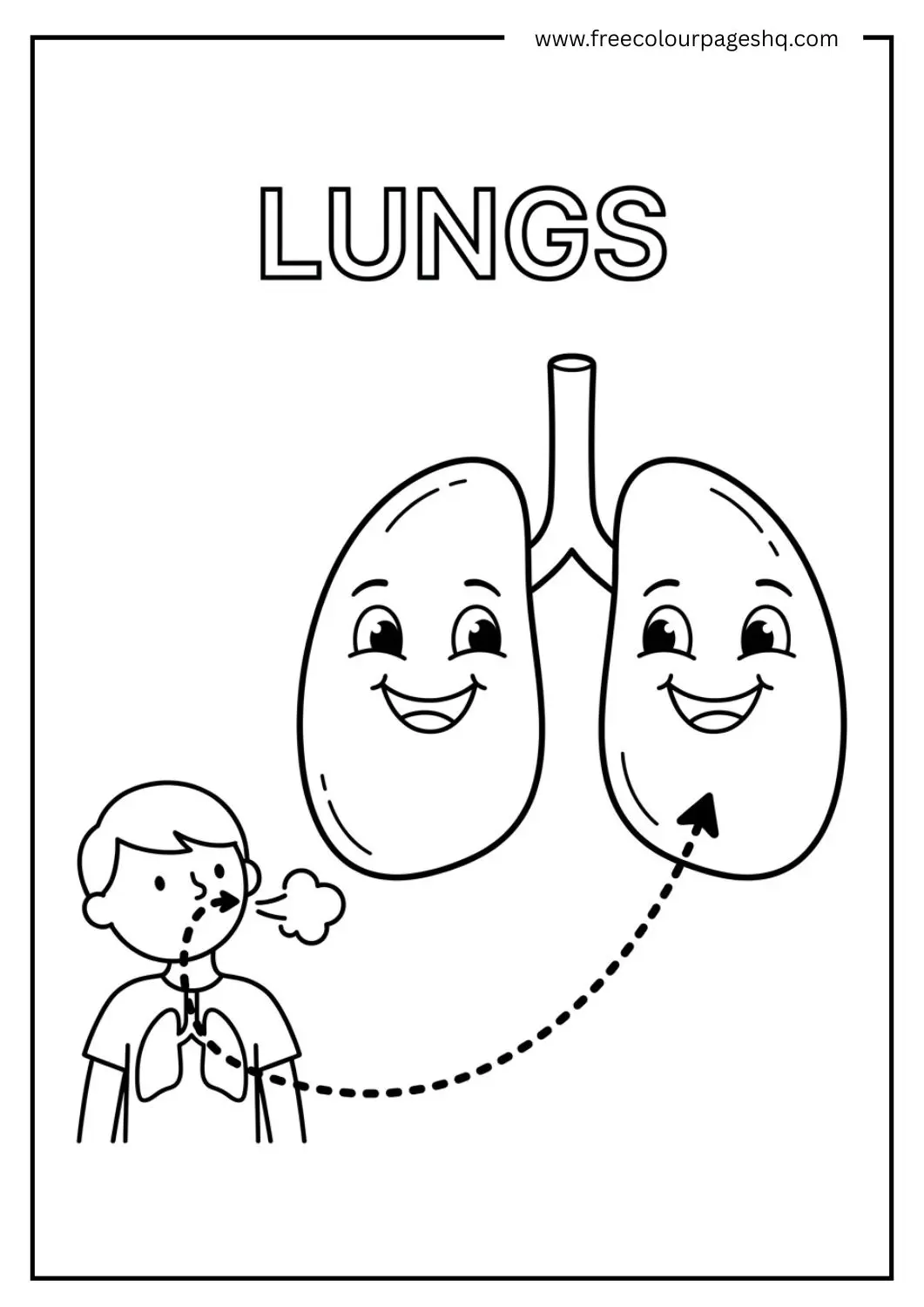
body parts coloring page lungs for kids
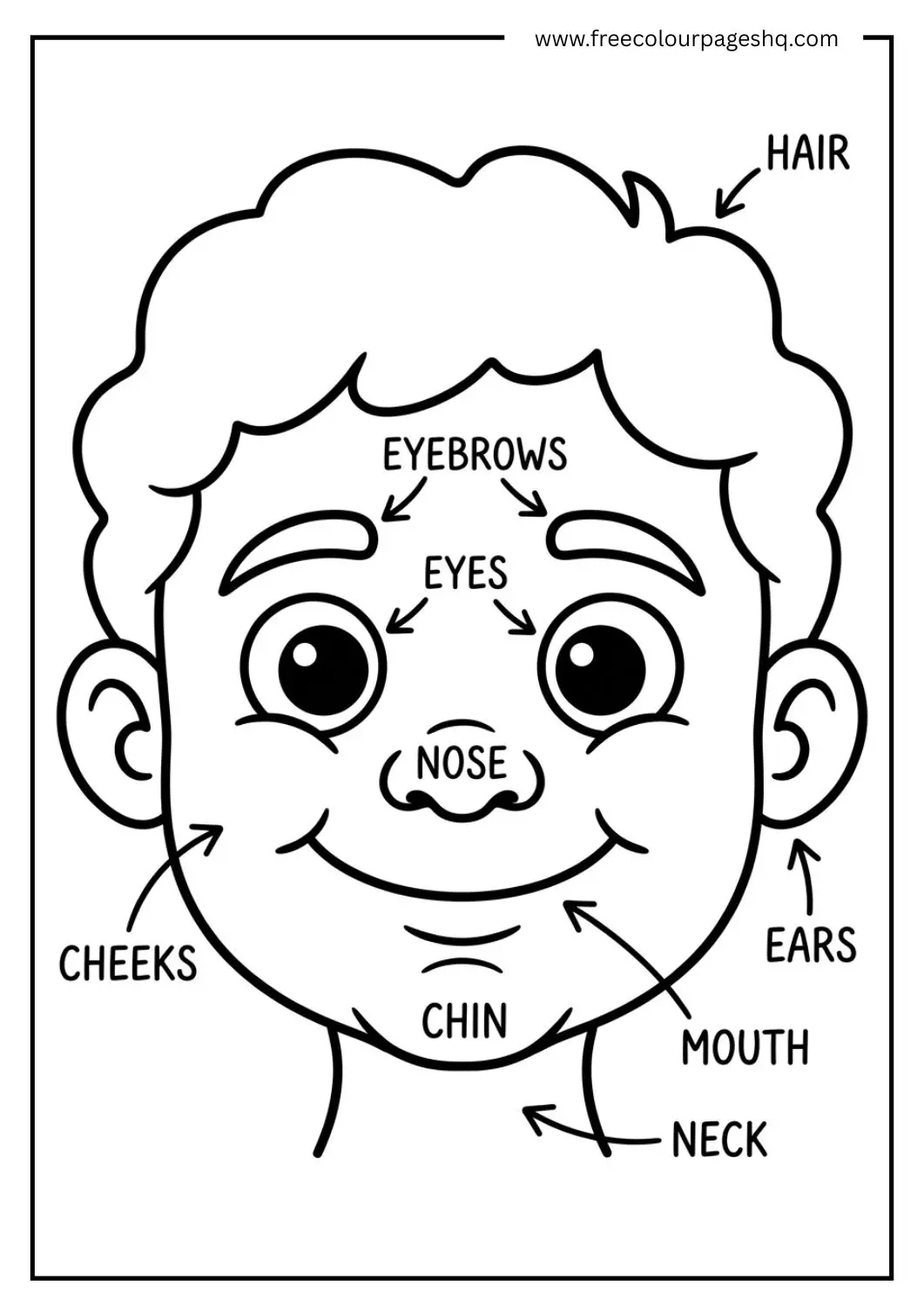
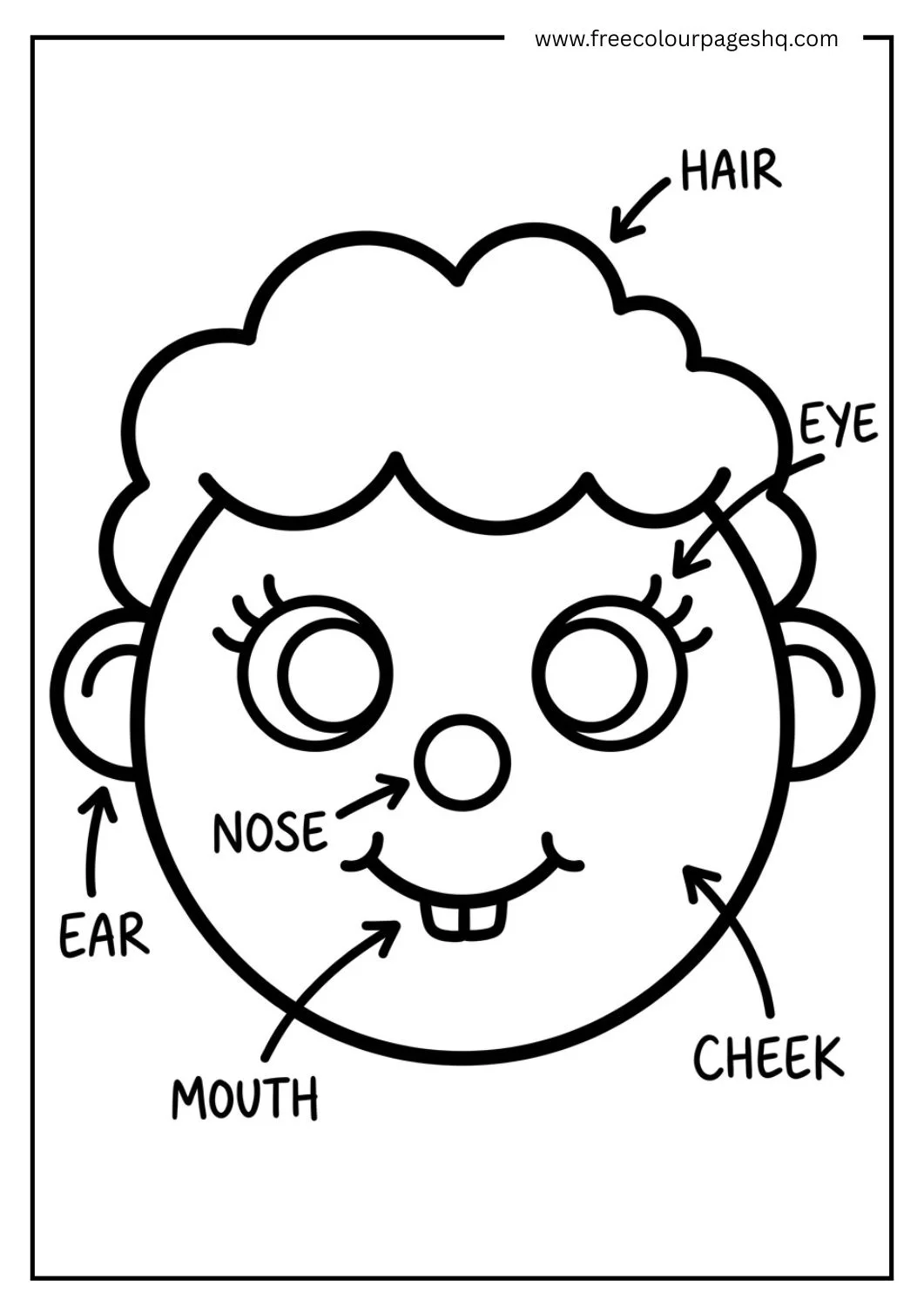
body parts coloring page hair face for preschool
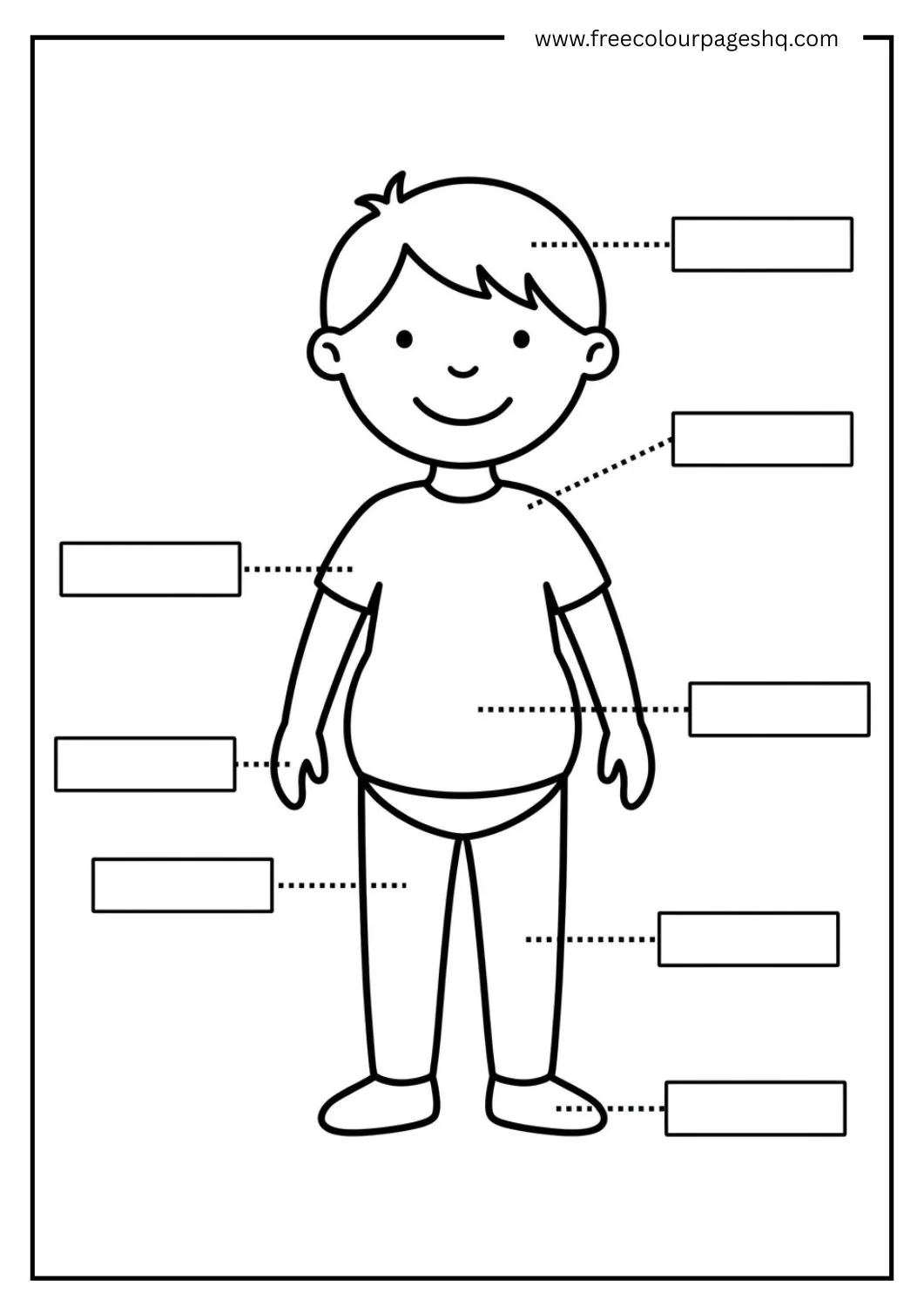
body parts coloring page for kindergarten, label and color
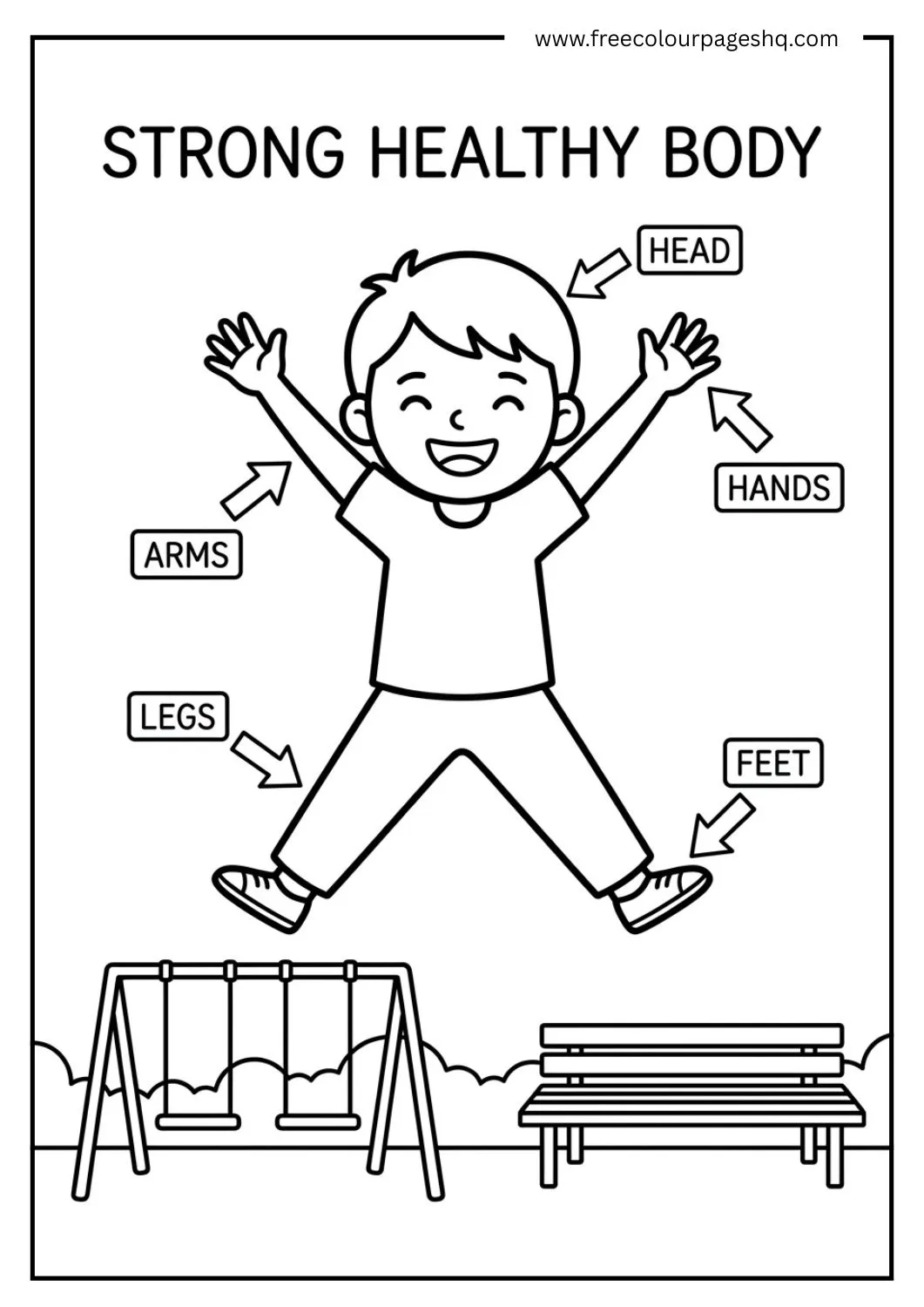
body parts coloring page exercise strong body
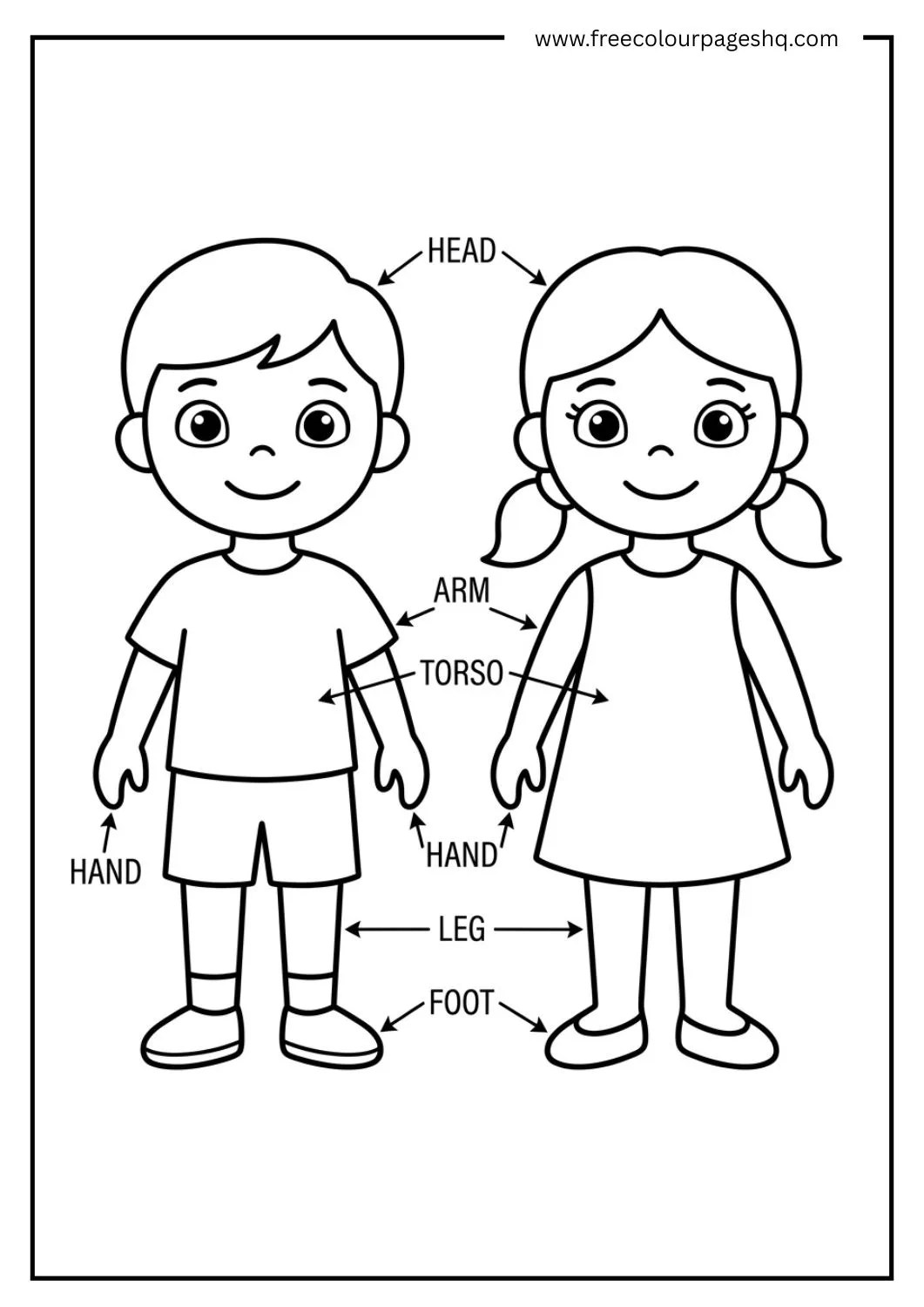
body parts coloring page boy and girl preschool
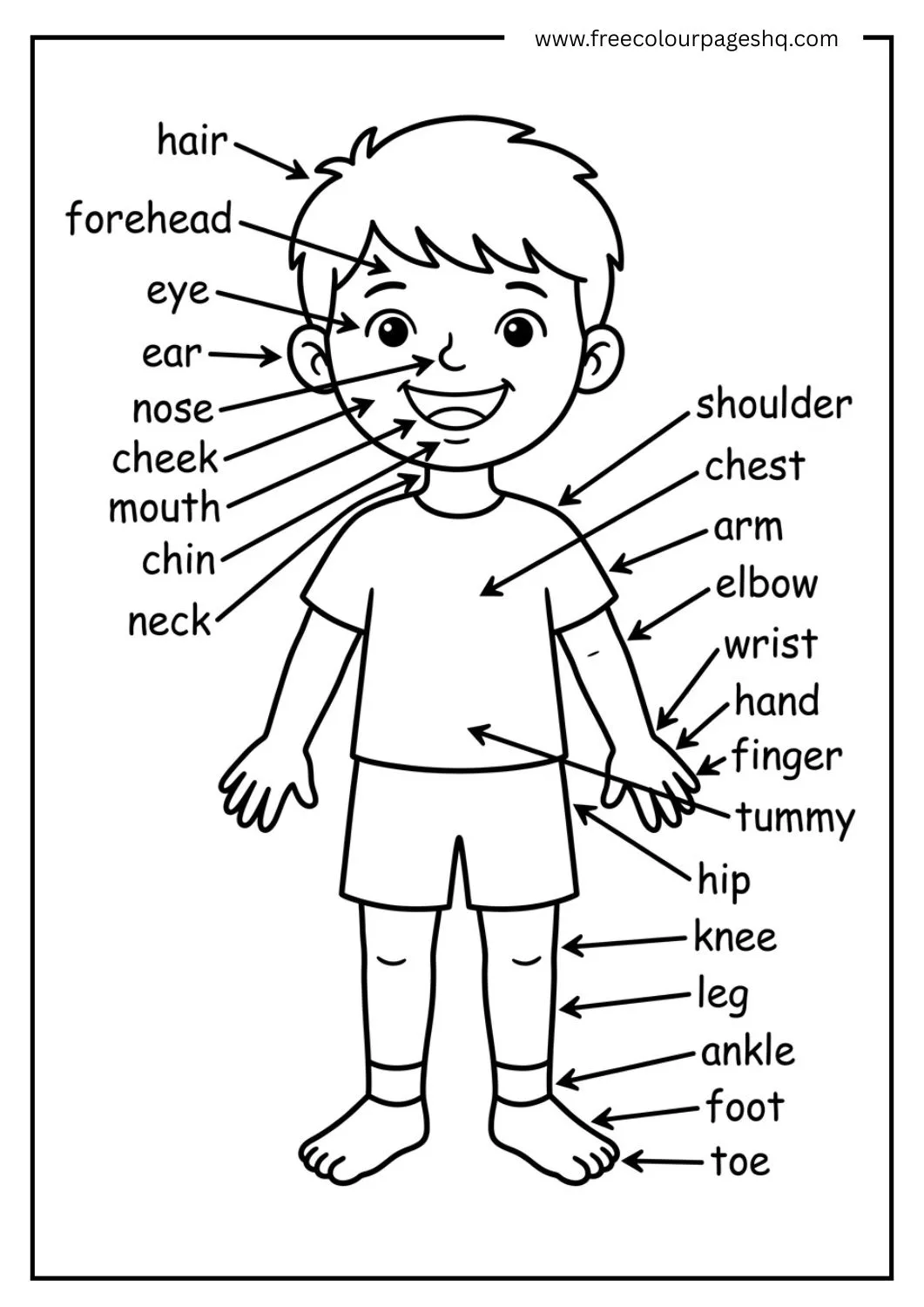
body parts coloring page, all body parts complete label
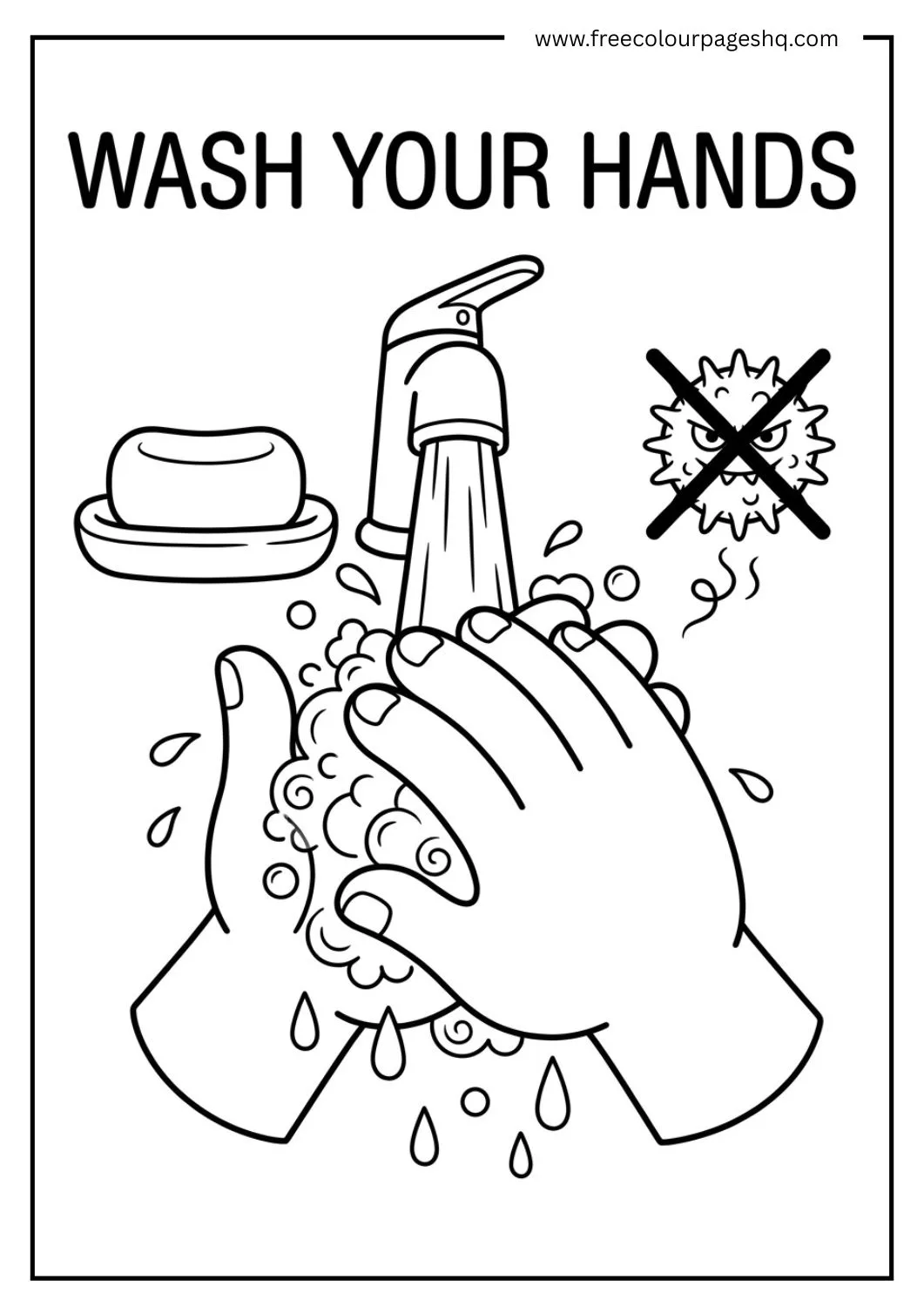
washing hands coloring page body parts hygiene
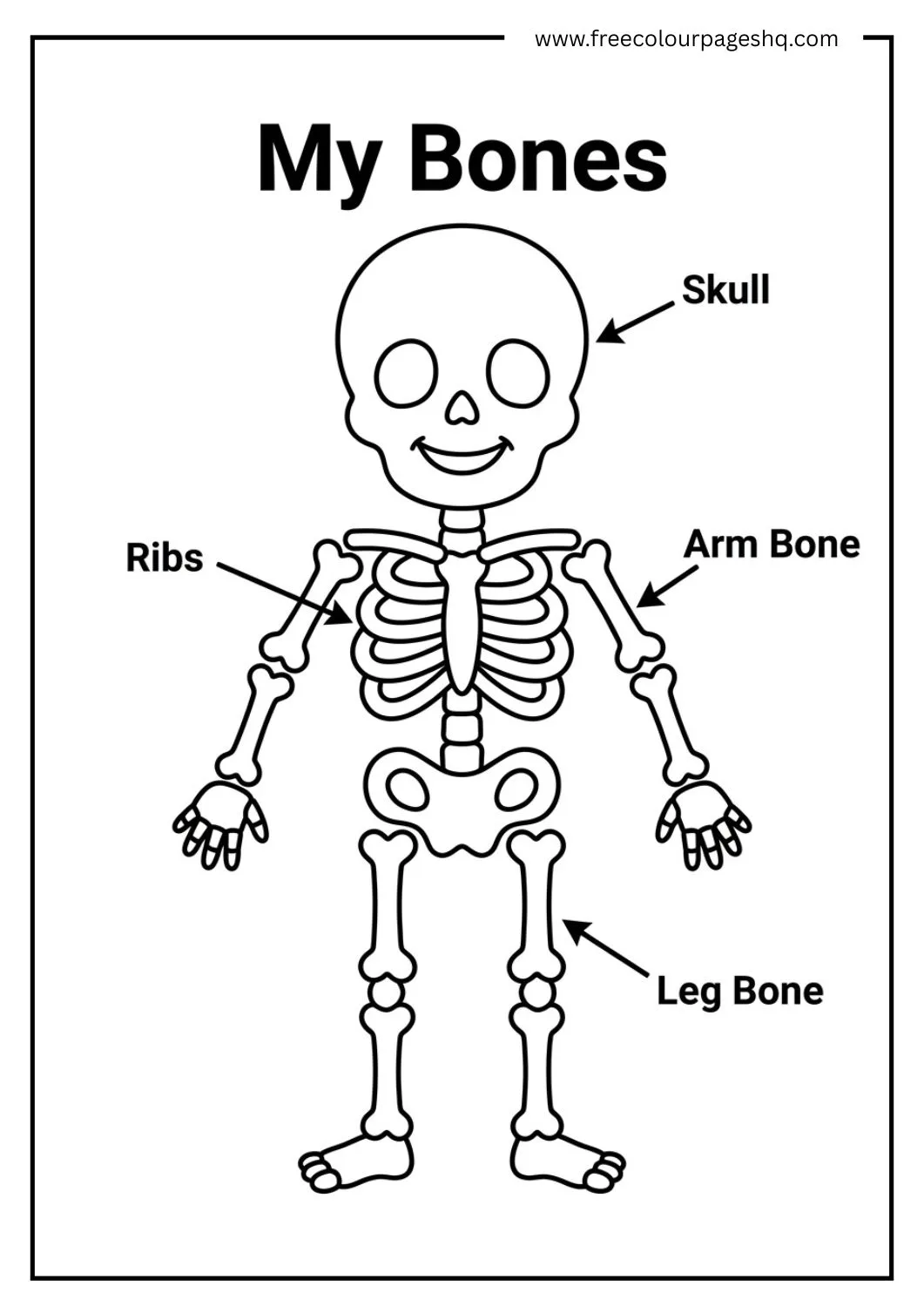
skeleton body parts coloring page for kids
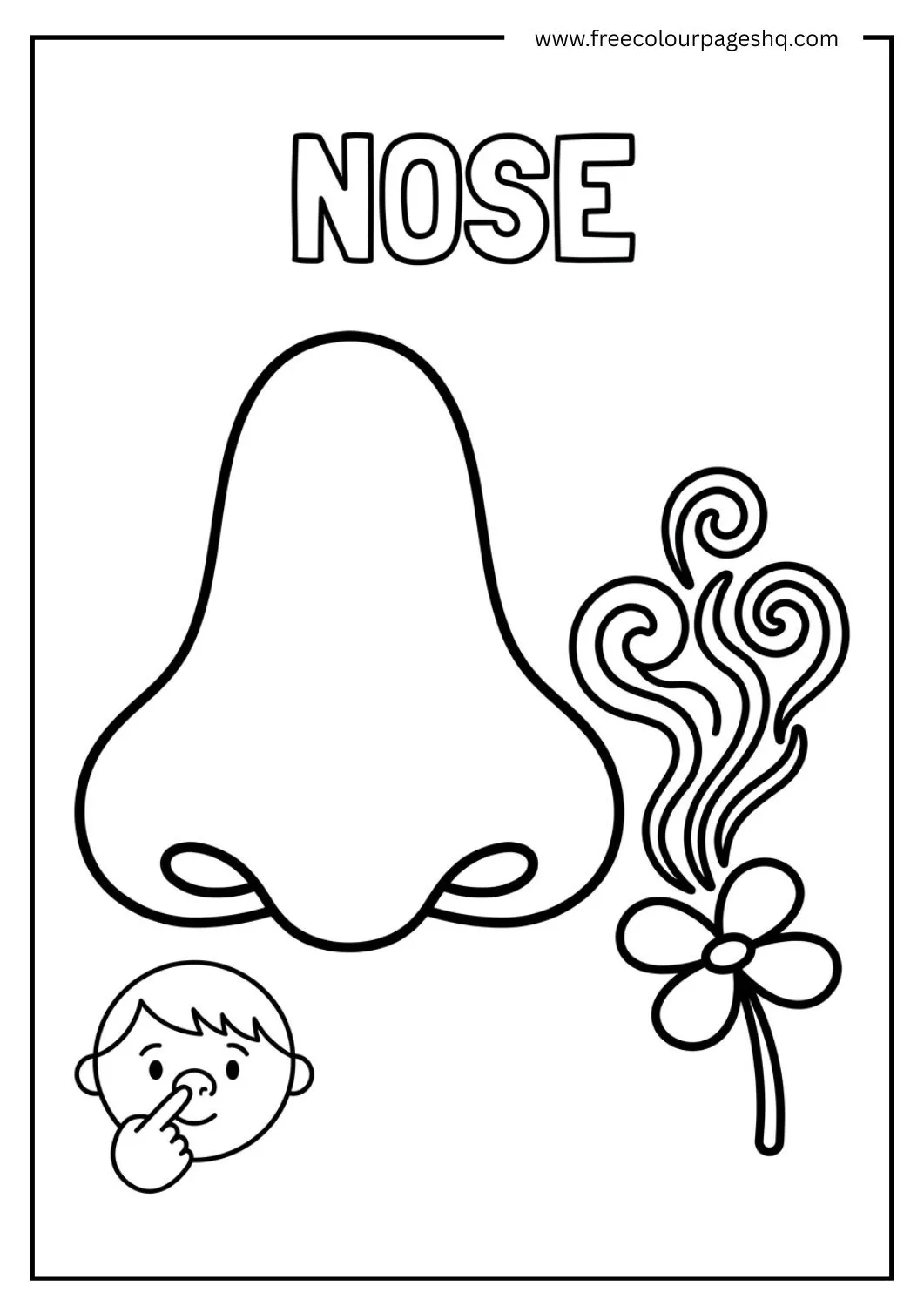
nose coloring page for preschoolers body parts
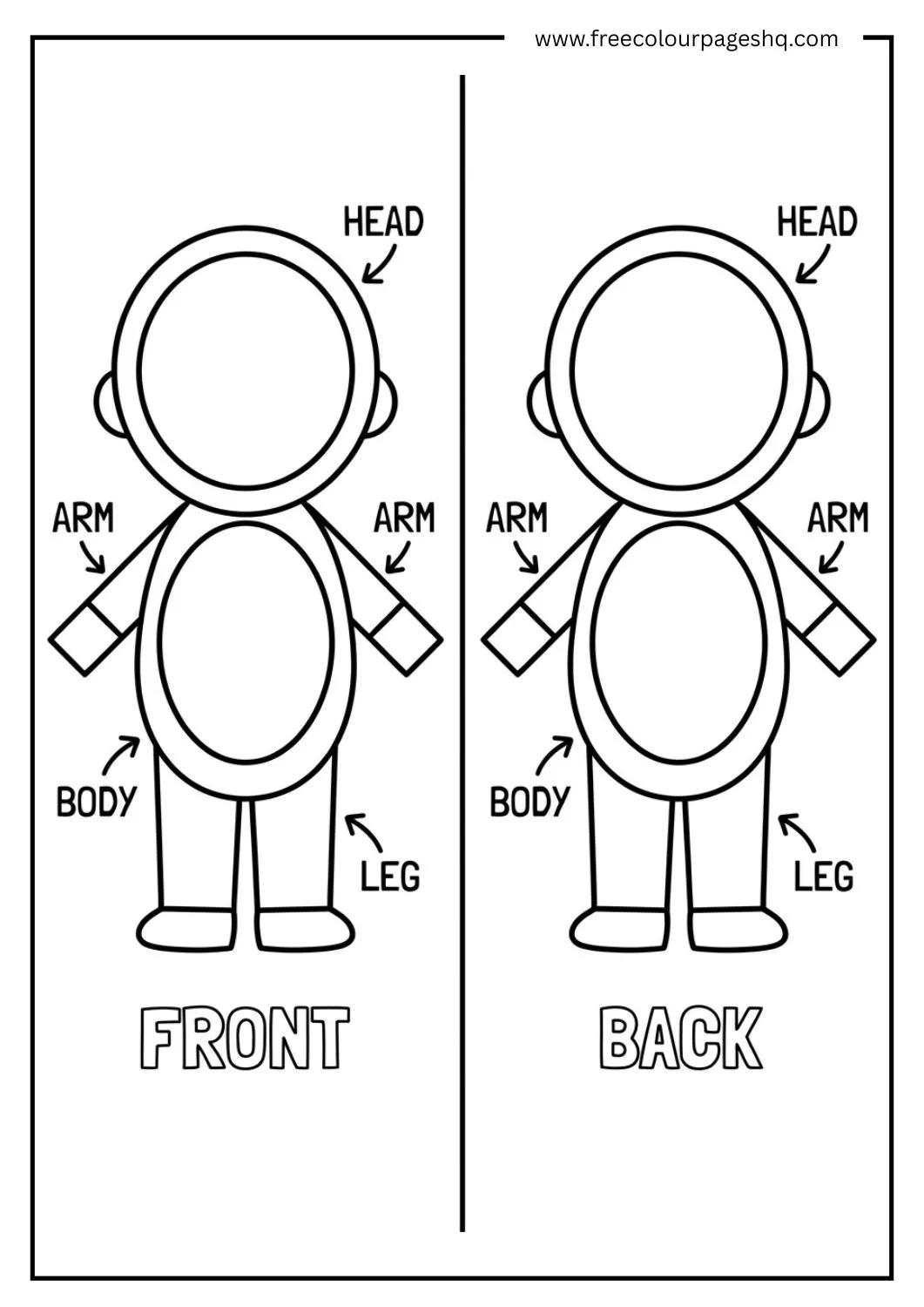
My body coloring page for toddlers, front and back
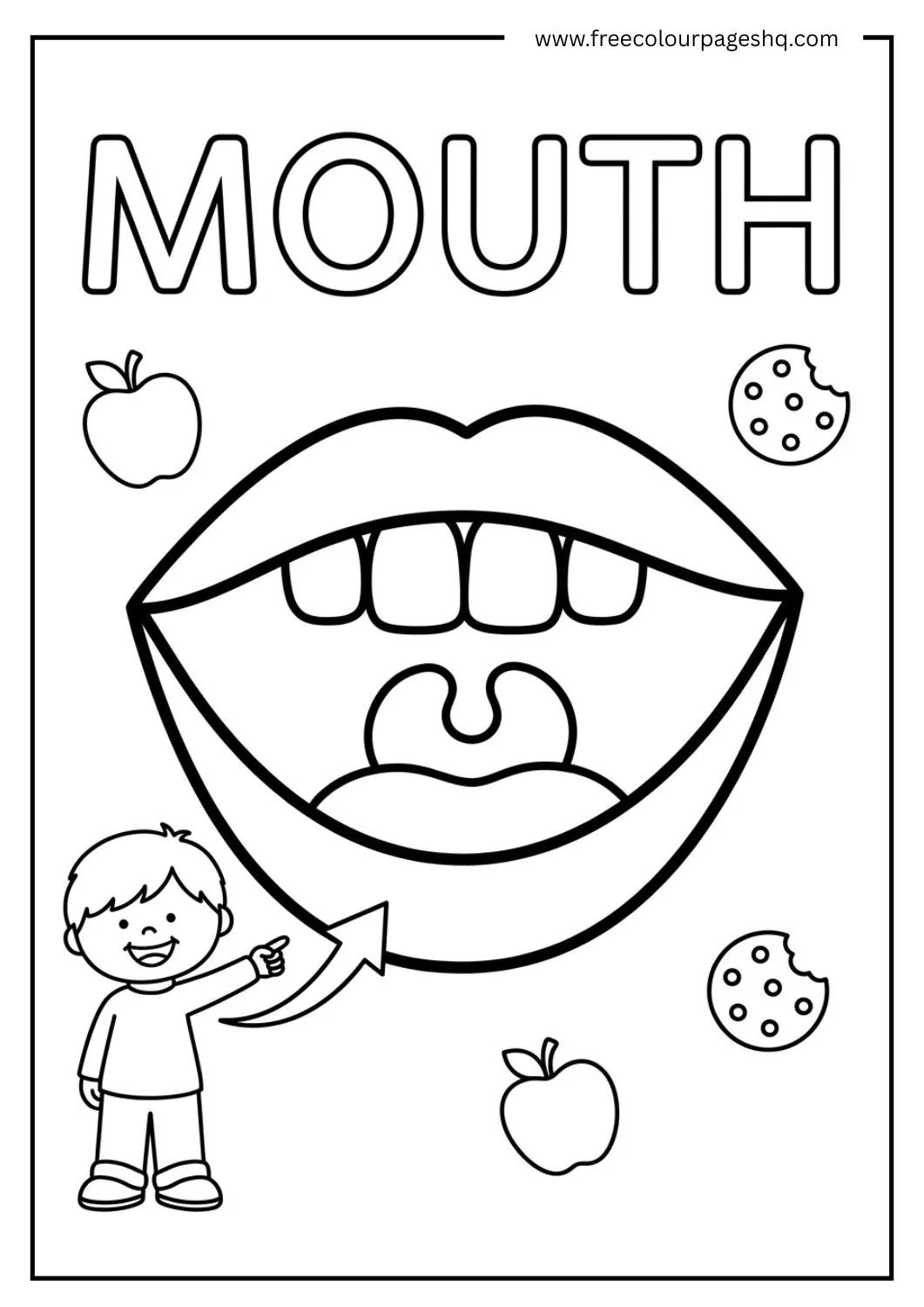
mouth coloring page body parts for kids
Why Body Parts Coloring Pages Work for Early Learners
Body parts vocabulary is among the earliest language children acquire because the referents, the actual body parts, are always immediately available. A child learning the word apple needs an apple to be present. A child learning the word nose can point to their own face. This immediacy makes body parts one of the most natural and most successful early vocabulary topics.
Body parts coloring pages extend this natural learning by adding three things that pure verbal learning does not provide. Visual representation of the body part as a distinct subject. Fine motor practice through the colouring activity. And written labels that connect the spoken word to its printed form, which is genuinely valuable pre-literacy work.
Research consistently shows that multisensory learning produces stronger retention than single-mode instruction. A child who hears the word elbow, sees a labelled illustration, colours the image and then points to their own elbow has encountered the same vocabulary item through four different channels in a single session. These body parts coloring pages are designed to be that multisensory encounter.
Explore more Free Printable Coloring Collections
Looking for more engaging activities? Check out these free printable coloring pages fun for kids, useful for teachers, relaxing for adults, and inspiring for designers.
Body Parts Coloring Pages for Toddlers
Body parts coloring pages for toddlers need to be as simple as possible. Very large outlines, minimal interior detail, one clear subject per page and a bold printed label. The colouring itself is secondary to the vocabulary encounter at this age.
The most effective designs for toddlers show a single large body part taking up most of the page. A large pair of hands. A large round face. Two large feet. These simple body parts coloring pages for toddlers give small hands a manageable coloring task while providing a clear visual anchor for the vocabulary being learned.
Printable body parts coloring pages for toddlers that include a tiny action illustration alongside the body part help connect the part to its function. Hands shown beside a drawing of clapping. Feet shown beside footprints. Ears shown beside a simple musical note. These connections reinforce the body part’s purpose in a way that a plain labeled outline does not.
Full body outline coloring pages for toddlers, showing a simple standing child figure with minimal detail and very bold outlines, give the youngest children a complete body reference they can explore gradually. Point to the head, the tummy, the legs. Then colour each area. This whole-body approach works particularly well as a beginning before moving to individual body part pages.
Body Parts Coloring Pages for Preschool
Preschool body parts coloring pages open up into more detail and more educational structure. Children aged three to five can handle labeling arrows pointing to named parts, simple function descriptions alongside each illustration, and pages that show multiple related parts together.
Parts of the body coloring pages for preschool typically show either a complete labeled body figure or individual sections with arrows pointing to named structures. A face page showing eyes, ears, nose, mouth, cheeks, chin and forehead all labeled. An arm page showing shoulder, elbow, wrist and fingers with arrows. These labeled pages give preschool teachers a ready-made vocabulary activity without any additional preparation.
The classic Head Shoulders Knees and Toes body parts coloring page connects to a song that almost every preschool child already knows. A page showing a standing figure with four circular highlights marking those four named body parts gives children the visual reference for something they have been singing since before they could reliably identify each part by sight.
Coloring pages of body parts for preschoolers that include a simple tracing or labeling element, with blank spaces beside each labeled arrow for the child to trace or copy the word, bridge the body parts vocabulary work with early handwriting practice in a natural way.
Body Parts Coloring Pages for Kindergarten
Body parts coloring pages for kindergarten move beyond simple naming toward function and connection. Five and six year olds can begin understanding what different body parts do, not just what they are called.
A kindergarten body parts worksheet that shows a body figure with blank label lines for the child to fill in themselves tests vocabulary retention in a way that pre-labeled pages do not. The child must retrieve the word, not simply recognise it. This retrieval practice is one of the most effective ways to move vocabulary from recognition to active use.
Body parts coloring pages for kindergarten that connect each part to a sense work particularly well in science unit contexts. The eyes see. The ears hear. The nose smells. The mouth tastes. The skin and hands touch. A five senses body parts page organising these connections gives children their first introduction to the sensory systems in a visual and practical format.
The Five Senses Body Parts Coloring Pages
The five senses provide a natural organising framework for external body parts coloring pages. Children encounter sensory vocabulary early and frequently, and connecting each sense to its specific body part gives the abstract concept of a sense a concrete physical anchor.
My body coloring pages that show the five senses organs, eyes, ears, nose, mouth and hands, arranged around a central face with labeled arrows to each, give children a complete sensory reference in a single page. These five senses designs are among the most used in preschool and kindergarten science units because they connect to hands-on sensory activities that teachers already use regularly.
A seeing coloring page showing large detailed cartoon eyes with their characteristic parts, iris, pupil, eyelashes and eyebrows, gives children a specific close-up of the sense organ for vision. An equivalent hearing page shows the outer ear structure. A smelling page shows the nose. A tasting page shows the mouth and tongue. A touching page shows the hands with their sensitive fingertips.
These individual sense organ coloring pages work well as a week-by-week sequence. Each week the class explores one sense through activities and completes the corresponding body parts coloring page as a creative record of the week’s learning.
Hygiene Body Parts Coloring Pages
Hygiene coloring pages connect body parts vocabulary to the practical routines that keep those parts healthy. These pages are particularly valuable because they reinforce the why of hygiene habits, not just the what.
A handwashing coloring page showing large cartoon hands under running water with soap bubbles, a bar of soap beside the tap and a simple germ character with an X through it, gives the habit of handwashing a visual story. Children who colour this page are simultaneously reviewing the vocabulary for hands, water and soap while reinforcing the connection between those things and cleanliness.
A teeth and mouth hygiene coloring page showing a large open mouth with a toothbrush and toothpaste foam, a happy tooth character and the words Brush Your Teeth, connects mouth vocabulary to the twice-daily routine in a way that children can point to and reference. These hygiene body parts pages work well displayed in a bathroom or classroom bathroom area as a reminder as well as a coloring activity.
A nose blowing coloring page showing a child using a tissue correctly connects nose vocabulary to the hygiene routine most relevant in cold and flu seasons. Teachers find these hygiene-connected body parts coloring pages particularly useful in the autumn and winter terms.
Internal Organs Coloring Pages for Older Children
Internal organs coloring pages serve a different educational purpose from external body parts pages. Where external body parts vocabulary is introduced very early, internal organ knowledge develops through the primary school years as part of science curriculum.
A heart coloring page for young children uses a simplified cartoon-style heart rather than an anatomically accurate one. A round cheerful shape with a smiling face, two tubes entering at the top and a simple description reading the heart pumps blood through your body. This friendly introduction to the concept of the heart as a working organ is appropriate for ages three to six.
A lungs coloring page for early learners shows two rounded balloon-like shapes connected by a simple trachea tube, both with cheerful expressions and a simple description about breathing. Children who complete this page begin to understand that what they feel when they take a deep breath involves something specific happening inside their body.
More detailed anatomy coloring pages for older primary school children can show the brain, stomach, kidneys, liver and other organs with more structural accuracy. A brain coloring page for a seven or eight year old can show the characteristic folded surface and left and right hemispheres with simple function labels. A stomach coloring page can show the organ in context within the body outline, with directional arrows showing food coming in and leaving.
Human body coloring pages that show a transparent body outline with the major organs placed in their correct positions give older children a spatial understanding of anatomy that individual organ pages do not provide. Where does the heart sit relative to the lungs? Where are the kidneys in relation to the stomach? These spatial relationships matter for genuine anatomical understanding.
Body Outline Coloring Pages and Tracing Activities
Printable body outline coloring pages, showing a simple standing human figure outline on paper large enough for tracing, support the most hands-on of all body parts learning activities. The body tracing activity is a staple of preschool and early primary classrooms for good reason. A child lies on large paper, an adult traces their outline, and the resulting life-size figure becomes a canvas for placing labeled body part labels, drawing organs in their correct positions, or simply being coloured and decorated.
A blank person coloring page at standard print size gives children a scaled-down version of this activity they can complete independently. The simple body outline provides a frame for whatever body parts learning is happening that week. Colour and label the face one week. Mark the arm joints the next. Place the heart in the correct chest position the week after.
Person outline coloring pages serve a dual purpose as both body parts learning tools and creative activities. A child who colours the body outline figure and then draws their own face, hair and clothing has engaged with body parts learning while also creating something personally expressive.
Using Body Parts Coloring Pages in the Classroom
Body parts coloring pages serve multiple classroom purposes that make them consistently valuable across different educational settings.
In a preschool classroom, parts of the body coloring pages work as circle time follow-up activities, as fine motor skill practice during free play, as take-home sheets that continue the week’s vocabulary learning at home, and as components of a My Body theme unit display.
In a kindergarten classroom, printable body parts coloring pages function as science activity pages, as vocabulary review tools before a unit assessment, as early writing practice when paired with blank label lines, and as the starting point for the five senses investigations that most kindergarten science curricula include.
In homeschool settings, free printable body parts worksheets give parents ready-made materials for body systems learning without requiring curriculum-level preparation. A single body parts coloring page paired with a hands-on activity, a body tracing or a point-to-the-organ game, constitutes a complete and meaningful science session.
Printing Tips
All body parts coloring pages in this collection download as free PDF files. PDF format preserves label clarity and line quality at any print size and scales correctly to both US Letter and A4 paper without manual adjustment.
Print at normal or high quality settings. The small labeled text on anatomy coloring pages prints significantly more clearly at normal quality than at draft mode. Draft mode can make small label text difficult for young children to read.
For classroom sets, standard 80gsm paper works well for all crayon and marker work. For laminating display pieces, printing on slightly heavier 90gsm paper produces a more durable finished result.
Body parts coloring pages printed at A3 size, if your printer allows this, make more effective classroom display pieces than standard print size. The larger format makes the label text clearly readable from a distance and gives the completed coloring page more visual impact on a classroom wall.
Conclusion
Children are curious about their own bodies from very early on. The questions start simple: why does my tummy make noise, why do I have two eyes instead of one, what is that thing in my chest that beats. Body parts coloring pages give those questions a structured creative context, something to look at, to name, to colour and to ask about. A two-year-old filling in a large simple hand outline with a single crayon is having a completely different experience from an eight-year-old carefully labeling a heart diagram, but both are using the same essential tool in an age-appropriate way.
Download whatever design suits whatever the learning moment is. Print a few extras for the classroom. The ones that get the most careful colouring are always the ones connected to a question the child was already asking.
FAQ
Are these body parts coloring pages free?
Yes. Every page downloads as a free PDF with no sign-up, no watermark and no cost. Print as many copies as needed for personal, classroom or homeschool use.
What paper size do body parts coloring pages print on?
All files are formatted for US Letter and print cleanly on A4 paper without manual adjustment.
Which body parts coloring pages work best for toddlers?
Simple single body part designs with very large outlines and minimal detail. Full body outline pages and large individual part pages, hands, feet, face, work best for children aged two to three.
Are there body parts coloring pages for kindergarten?
Yes. Labeled body figure pages with blank label lines, five senses pages and simple organ introduction pages are included for five and six year old learners.
Can these be used in a preschool classroom?
Yes. All pages print in multiple copies for group use and work well as My Body theme unit activities, fine motor skill practice and take-home learning sheets.
Are there internal organs coloring pages included?
Yes. Simplified cartoon-style pages for the heart, lungs and brain suitable for young children are included, alongside more detailed organ pages for older primary school children.